


Muscle Atrophy in Horses
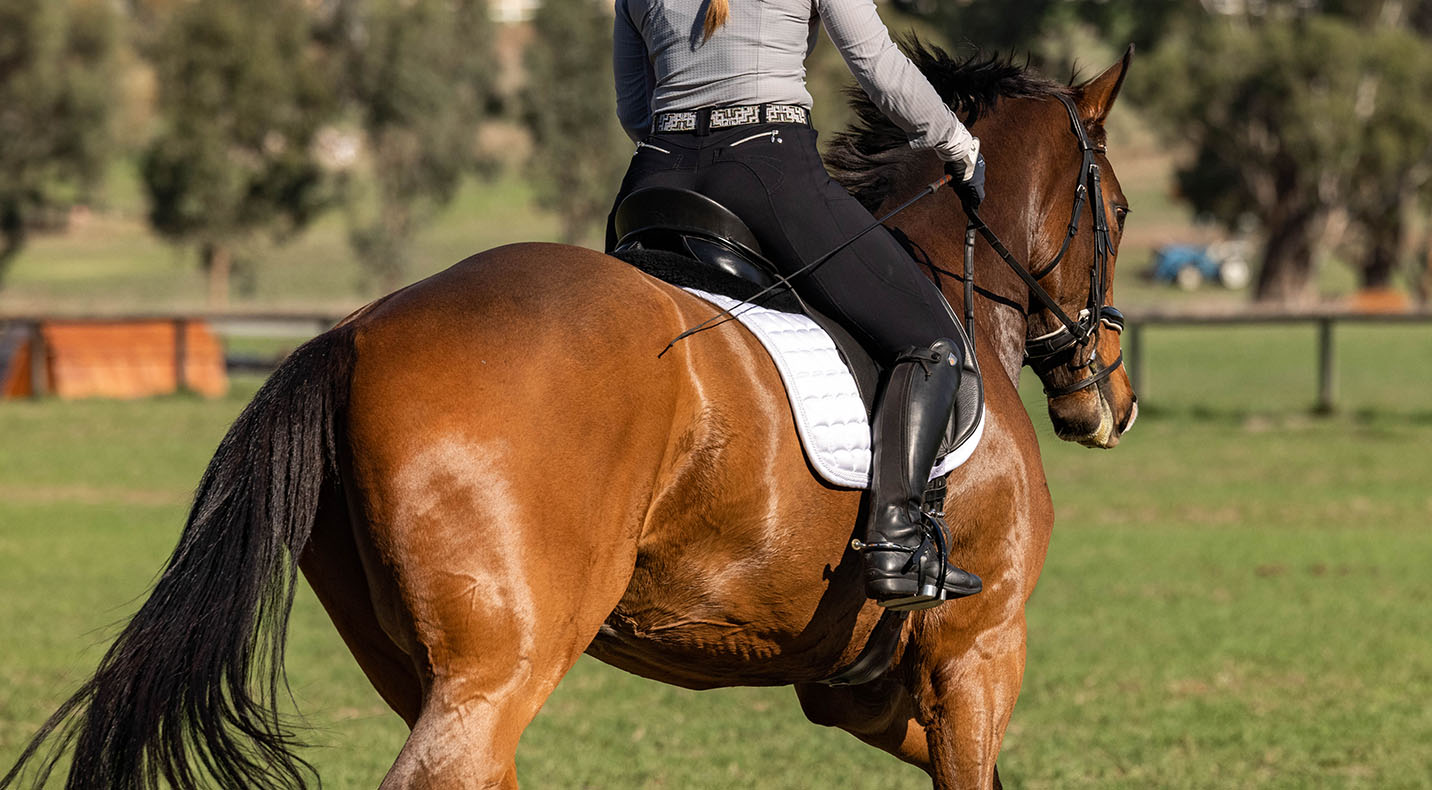
The horse’s large muscle mass enables it to be a superior athlete. Muscles help to maintain and support organs, facilitate limb movement and store energy for use when exercising. Muscle fibre is about 23% protein and 75% water. The muscle protein pool is renewed every 2-3 months in horses. Our training, exercise and nutrition programs largely influence the horse’s muscle mass, development and fibre type. Sometimes, muscle does not develop the way we want it to, or horses may display muscle loss or wastage (atrophy). Understanding how muscle atrophy occurs and the influencing factors can help us address it.
Naturally, muscle mass impacts performance. A 5% loss in muscle mass can result in a performance loss of 10-15%. The type of training the horse is doing, and the frame in which it holds itself, impacts the areas that muscle develops. For example, for a horse to have a well developed ‘topline’ it needs to be working in a frame that recruits the muscles along the top of the neck, back and hindquarters. Atrophy occurs when there is a lack of muscle fibre recruitment. When muscle fibres are not being recruited, the diameter of the fibres decreases. Muscle fibre types II and IIB, involved in slow and intense exercise respectively, decrease first. Type I fibres are postural and are somewhat preserved. In a physical appearance sense, muscle atrophy represents a decline in strength, size and performance.
Where there is a concern about loss/lack of muscle, the horse should be assessed thoroughly. This involves a full history, visual inspection of posture symmetry, palpation of the muscle, a body condition score and, where applicable, a neurological examination. Understanding the discipline the horse is participating in, and normal muscle development at the stage of training are also important. The use of a grading system can be useful to define muscle mass.
Establishing if the muscle loss is focal or generalised will help determine the route of investigation. In the case of general muscle underdevelopment, calorie intake should be assessed, along with ensuring adequate protein, fats, vitamins and minerals are being supplied by the diet. It is also important to check dental health and consider pain, ulcers or disease. There are a number of muscle myopathies that can be the cause of atrophy: vitamin E responsive myopathy, myosin heavy chain myopathy, Myofibrillar myopathy (MFM), Pituitary pars intermediary disease (PPID), Polysaccharide storage myopathy (PSSM), and Equine motor neuron disease (EMND). Simple disuse can also contribute – horses who have been rested, confined due to injury, or a lack of recruitment of appropriate muscle during exercise.
Once disease and pain response have been ruled out, diet and training can be addressed. From a nutritional perspective, ensuring an adequate, quality fibre base is a good place to start. To develop muscle, a correct balance of calories, fats and protein, from supplementary feed, is required in addition to hay. Pegasus Feeds such as Liberty, Coolmax and Sweetmax are ideal for helping keep horses in well-rounded condition, whilst providing a fully balanced diet. Liberty and Sweetmax contain Equi-Jewel, a rice bran-based fat supplement that is excellent for improving body and muscle condition, particularly when combined with appropriate exercise. Nutritional advice, to develop a tailored feed plan, is best sought for horses suffering from lack of muscle development. Remember, muscle recruitment is key for muscle development, so the feeding program should work hand in hand with a targeted exercise program.
Source: Material presented by Dr Stephanie Valberg at the 28th KER Equine Health & Nutrition Conference.